ChatGPT Is Introducing Ads — How Brands Should Prepare for the AI Search Transition
OpenAI has announced plans to introduce advertising into ChatGPT. For brands that have built their marketing strategies around AI search visibility, this development marks a pivotal moment—one that demands strategic preparation rather than reactive spending.
The smartest brands won't wait to see how ads reshape AI discovery. They're establishing their organic visibility baseline now, before paid placement becomes another variable in an already complex landscape.
This article explains what OpenAI has announced, how ads and organic recommendations will coexist, and—critically—what brands should do today to position themselves for the transition ahead.
What OpenAI Has Announced About Advertising in ChatGPT
In late 2024, OpenAI made its intentions clear. According to an official OpenAI blog post, the company is exploring advertising as a way to expand access to its AI products while diversifying revenue beyond subscriptions.
Key details from the announcement include:
- Ads will be clearly labeled. OpenAI emphasized transparency—sponsored content will be distinguishable from organic AI responses.
- Paid tiers will remain ad-free. ChatGPT Plus and Enterprise subscribers will continue to experience the product without advertising interruption.
- Ads will not influence AI answers. OpenAI stated that advertising will not directly affect the recommendations or information ChatGPT provides in its responses.
Reuters reported that OpenAI is actively testing ad formats, with initial placements expected to appear alongside search-style responses. The company has hired advertising industry veterans to lead the initiative.
What does this mean for brands? The window to establish organic AI visibility—before advertising adds noise to the discovery process—is closing.
How AI Answers and Ads Will Coexist (And Why That Matters)
Understanding the architecture of this change is essential. ChatGPT's advertising model is not replacing AI-generated recommendations—it's being layered on top of them.
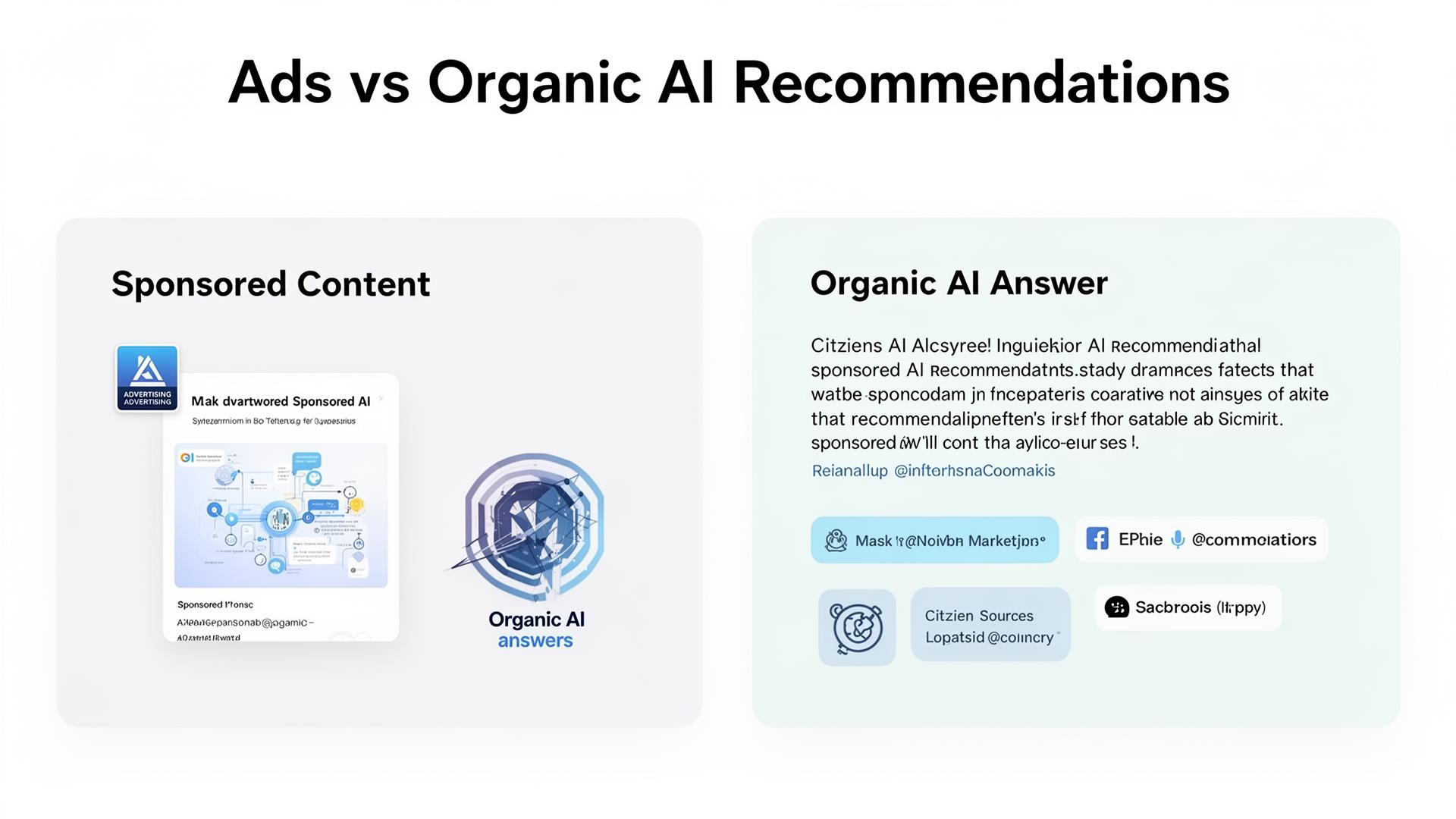
Consider how this differs from traditional search advertising:
- Google Ads: Paid placements appear before organic results. Users know the top results are ads, but ads still dominate the viewport.
- ChatGPT's Model: AI-generated answers synthesize information and recommend brands based on training data and context. Ads appear separately, labeled as sponsored.
This distinction matters for one critical reason: the organic AI recommendation is still the trust signal. When ChatGPT answers "What's the best project management tool for remote teams?" and mentions your brand organically, that carries authority. An ad appearing alongside that answer is a different type of exposure entirely.
The Trust Hierarchy in AI Search
User perception of AI recommendations follows a clear hierarchy:
- Organic AI mention with citation — Highest trust. The AI synthesized information and selected your brand.
- Organic AI mention without citation — High trust. Your brand appeared in the answer based on training data.
- Labeled advertisement — Moderate awareness. Users understand this is paid placement.
- No mention at all — Invisibility. Your brand doesn't exist in that search context.
Brands that already have organic visibility will benefit from a compound effect when ads roll out. Those invisible to AI today will find themselves competing for attention in a more crowded, more expensive environment.
Why Brand Visibility Before Ads Is the Real Advantage
The brands that will win in AI search aren't those with the largest ad budgets—they're those that understand their organic visibility before monetization reshapes the landscape.
Here's why establishing visibility now provides lasting advantage:
1. Organic Recommendations Build Compounding Authority
When ChatGPT consistently mentions your brand in relevant contexts, it reinforces your authority across future interactions. This isn't speculation—it's how language models work. Training data that includes your brand in authoritative contexts increases the likelihood of future mentions.
Ads, by contrast, are transactional. You pay, you appear, you disappear. Organic visibility compounds.
2. Understanding Your Baseline Informs Strategy
How can you measure the impact of advertising if you don't know your organic baseline? Brands using platforms like Llumos to monitor AI visibility can track changes over time, understand which competitors appear alongside them, and identify gaps before investing in paid placement.
3. Competitors Are Already Visible (Or Preparing to Be)
Business Insider projects that ChatGPT advertising could generate billions in annual revenue as the platform scales. This means major brands are already positioning themselves for the transition. Waiting until ads launch puts you behind competitors who are measuring and optimizing today.
Ads vs. Organic AI Recommendations: A Critical Distinction
Let's be explicit about what ads can and cannot do in the context of AI search.
| Characteristic | Organic AI Recommendation | ChatGPT Advertisement |
|---|---|---|
| Trust Signal | High — AI selected you based on context | Moderate — Users know it's paid |
| Persistence | Compounds over time | Transactional (stops when spending stops) |
| Influence on Answer | Directly part of the response | Separate from the AI answer |
| Cost Model | Investment in content and authority | Ongoing ad spend |
| Measurability | Requires AI visibility monitoring | Standard ad metrics (impressions, clicks) |
The key insight: advertising in ChatGPT will not make you visible in AI answers. It will make you visible alongside AI answers. For brands that want to be the answer—not just adjacent to it—organic visibility remains the strategic priority.
The Risk of Waiting: What Happens to Invisible Brands
Brands that delay AI visibility investment face compounding disadvantages:
Increased Competition for Attention
Once ads launch, the attention economy within ChatGPT becomes more crowded. Users will see organic recommendations and sponsored content. Brands that haven't established organic presence will be competing purely on ad spend—a race to the bottom.
No Baseline for Measurement
How will you know if your advertising is working if you don't know your organic visibility before ads existed? Establishing baseline metrics now allows for accurate attribution later.
Competitors Gain First-Mover Advantage
Early movers in AI visibility optimization are building authority that compounds. Every month of delay is a month where competitors strengthen their position in training data and real-time retrieval systems.
How to Prepare for the AI Ads Transition: An Actionable Framework
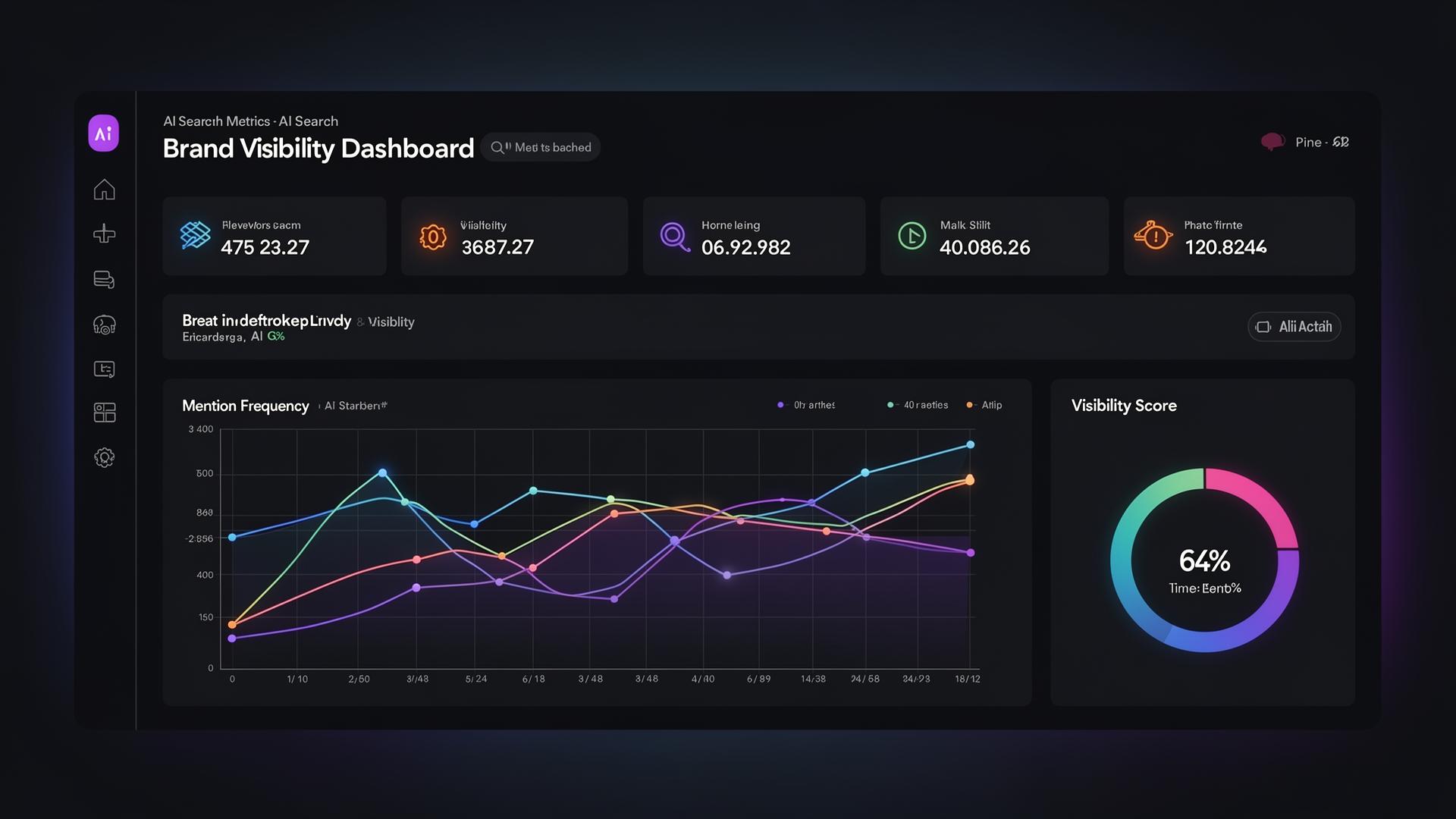
Strategic preparation for ChatGPT's advertising launch involves three phases: Measure, Monitor, and Optimize.
Phase 1: Measure Your Current AI Visibility
Before anything else, you need to understand where you stand today:
- Query testing: Ask ChatGPT, Perplexity, and Gemini questions your customers would ask. Are you mentioned? In what context? With what sentiment?
- Competitor analysis: Which competitors appear in responses where you don't? This reveals the visibility gap you need to close.
- Citation tracking: When you are mentioned, what sources does the AI cite? This indicates the content driving your visibility.
Llumos provides automated tracking across AI platforms, showing exactly how your brand appears compared to competitors. This baseline becomes invaluable once advertising introduces new variables.
Phase 2: Monitor Changes Over Time
AI visibility is not static. Language models update, retrieval systems evolve, and competitor activity shifts the landscape continuously.
- Track mention frequency: How often does your brand appear in relevant AI responses? Is this increasing or decreasing?
- Monitor sentiment: When AI mentions your brand, is the context positive, neutral, or negative?
- Watch competitor movement: If competitors suddenly gain visibility, you need to understand why.
Phase 3: Optimize for Organic Authority
With measurement and monitoring in place, focus on building the authority that drives organic AI visibility:
- Create authoritative content: Publish content that directly answers questions in your industry. AI platforms favor sources that provide clear, comprehensive answers.
- Build entity recognition: Ensure your brand is recognized as an entity—not just a keyword. This means consistent information across Wikipedia, Crunchbase, LinkedIn, and industry publications.
- Earn citations: Get mentioned in sources that AI platforms trust. Industry publications, news coverage, and expert roundups all contribute to visibility.
Measuring AI Visibility as a Leading Indicator
Traditional marketing metrics—traffic, conversions, rankings—are lagging indicators. By the time you see a decline, the damage is done.
AI visibility is a leading indicator. Changes in how AI platforms mention your brand signal shifts in authority and perception before those changes manifest in revenue.
Consider the metrics that matter most:
- Share of Voice: What percentage of relevant AI responses mention your brand versus competitors?
- Mention Frequency: How often does your brand appear across different query types?
- Sentiment Score: When mentioned, is your brand positioned positively?
- Citation Quality: What sources does the AI reference when mentioning you?
Llumos offers a free AI visibility assessment that provides baseline metrics across ChatGPT, Perplexity, and Gemini—giving brands the insight they need to prepare strategically.
Conclusion: Winning in AI Search Without Relying on Ads
ChatGPT's move into advertising is not a threat to brands that prepare. It's an opportunity to differentiate.
Ads will add noise to AI discovery. Brands that have already established organic visibility will cut through that noise. Those still invisible will find themselves in an expensive competition for attention—one where the rules favor those who started early.
The takeaway is clear: The smartest brands prepare for AI ads by understanding their AI visibility today—not by waiting to buy placement later.
Measure your visibility. Monitor the landscape. Build organic authority. And when ChatGPT advertising launches, you'll be positioned to benefit from both organic recommendations and strategic ad placement—rather than depending on ads alone.
Sources
Understand Your AI Visibility Before Ads Launch
Discover how your brand appears in ChatGPT, Perplexity, and Gemini responses—and how you compare to competitors. Start with a free visibility assessment.
Related Articles
AI Search Visibility in 2026: Why Brands Ranking #1 on Google Are Invisible to AI
Traditional SEO rankings don't guarantee AI visibility. Learn what actually drives brand mentions.
How to Optimize for ChatGPT Search: The 2025 GEO Guide
The 5 core strategies of Generative Engine Optimization to get cited by AI platforms.